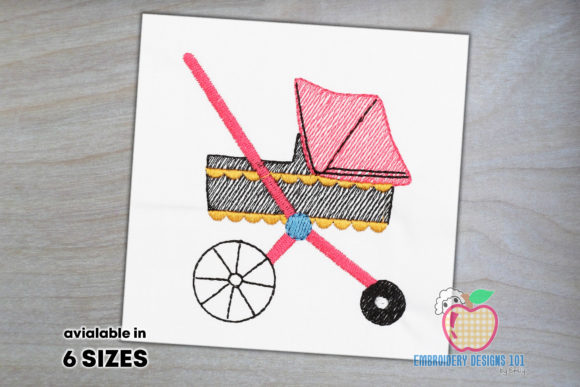
Baby Carriage Sketch Review
The Baby Carriage Sketch is a charming machine embroidery design that brings a touch of whimsy and nostalgia to small business merch, branded patches, and custom apparel. Its simple yet expressive style makes it ideal for businesses looking to add a friendly, approachable element to their brand identity. Whether used as an embroidered patch on a tote bag or as a chest logo on a work shirt, this design has the potential to enhance visual appeal while maintaining a professional edge.
First Impressions: A Friendly and Playful Design
From the first glance, Baby Carriage Sketch feels like a design that balances playfulness with a subtle elegance. The sketch-style illustration of a baby carriage suggests a handmade or artisanal vibe, which can be a strong asset for small businesses aiming to convey authenticity. It’s not overly detailed, but the simplicity allows it to adapt well to different fabric textures and embroidery styles. This makes it a versatile choice for small business merch, especially when paired with the right thread colors and stabilizer.
As a professional embroidery designer, I find that the design’s soft lines and minimalistic approach make it suitable for both modern and rustic branding. It can easily transition from a boutique gift item to a branded patch on a staff uniform without feeling out of place.
Real Business Use: Versatility in Custom Apparel
When considering real-world applications, Baby Carriage Sketch shines in several areas. For example, as an embroidered patch, it can be sewn onto aprons, caps, or tote bags, offering a unique way to showcase a business’s personality. It also works well as a chest logo on t-shirts or sweatshirts, adding a subtle touch of charm without overwhelming the overall design.
For small businesses, this design can serve as a key element in creating a cohesive brand identity. Whether it's used on a bakery’s apron, a florist’s tote bag, or a pet brand’s cap, Baby Carriage Sketch helps establish a recognizable visual presence. Its clean lines and gentle aesthetic make it particularly effective for handmade product branding, where customers often seek a personal and authentic connection.
In addition, the design can be used as a packaging accent or customer gift, reinforcing brand recognition through consistent visual elements. As a digital embroidery file, it offers flexibility for print-on-demand setups, Etsy sellers, and craft businesses looking to expand their product offerings.
Where to Use with Caution: Design Limitations
While Baby Carriage Sketch is a great design for many applications, there are certain scenarios where it may not perform as well. For instance, on small patch sizes, the details may become too compressed, leading to a less defined finished product. Similarly, if used on curved surfaces like a cap front, the sketch may appear distorted unless properly adjusted during digitization.
High stitch density or intricate outlines could pose challenges on textured fabrics or dark uniforms, where the design might not stand out as intended. Tiny lettering or complex details could also be lost if not carefully reviewed before production. It’s important to test the design at various scales and on different materials to ensure it meets quality standards.
Impact on Brand Identity and Customer Perception
Embroidered designs like Baby Carriage Sketch have a direct impact on how a brand is perceived by customers. A well-executed design can elevate the perceived value of a product, making it more appealing to buyers. When used consistently across merchandise, it reinforces brand recognition and builds trust over time.
For small businesses, this design can be a powerful tool in establishing a unique visual language. Whether it's on a boutique’s clothing line or a local café’s employee uniforms, Baby Carriage Sketch adds a layer of character that aligns with the values of handmade and personalized products. It also encourages buyer engagement by creating a sense of familiarity and comfort.
Additionally, the design’s friendly nature can help create a positive emotional response from customers, making them more likely to remember and return to a brand. This is especially valuable for businesses targeting families, young professionals, or those focused on lifestyle and wellness niches.
Practical Designer Notes for Success
Before finalizing any project involving Baby Carriage Sketch, it’s essential to follow a few key steps. First, test the design in black and white to assess its clarity and contrast. Then, check how it looks at a small patch size to ensure it remains legible. Review thread color choices to make sure they complement the fabric and enhance the design’s visual appeal.
Inspect the spacing between elements to avoid overcrowding, and confirm the hoop size required for your embroidery machine. Testing the design on real fabric with the appropriate stabilizer will help prevent puckering or distortion. Creating a printable mockup for client approval ensures that expectations are met before mass production begins.
Compare Baby Carriage Sketch with other design assets to maintain visual consistency across all branded items. Finally, always verify commercial licensing terms before using the design for business purposes to avoid any legal issues.
Conclusion: A Valuable Addition for Small Business Merch
Baby Carriage Sketch is a thoughtful and adaptable machine embroidery design that can significantly enhance small business merch, branded patches, and custom apparel. Its friendly, playful aesthetic makes it ideal for businesses looking to connect with customers on a personal level while maintaining a professional appearance.
With careful consideration of design limitations and proper execution, this embroidery file can become a staple in a business’s visual toolkit. Whether used on apron embroidery, cap embroidery, or tote bag design, Baby Carriage Sketch has the potential to strengthen brand identity and drive customer engagement. For embroidery shops, handmade brands, and Etsy sellers, this design offers a creative and practical solution for expanding product lines and meeting customer demand.